Showing posts with label reading comprehension. Show all posts

Armadillo’s Orange

If you use the Scott Foresman Reading Street Series, this book will probably be familiar to you!
image
It’s a cute story of a little armadillo who uses an orange to find his way back to his burrow.  When the orange rolls away, he doesn’t know how he will find his way back to his home.  What he never realized is that there were landmarks all around him to help him find his way home. 
I’m very particular about the Tier 2 vocabulary words I teach the children this year – my final research project for my master’s degree is about vocabulary acquisition, development, and teaching.  I love when I teach a word like landmark and the children continue to use the word!
We paid particular attention to the sequence of the story and made an adorable story map:
DSCN0512

We read some other books that had armadillo’s in them as well and compared/contrasted the setting and characters in each story.
imageimageimage
We read some non-fiction books about armadillo’s and made an armadillo tree map.
imageimage

We also did a directed drawing of an armadillo using directions from Jan Brett’s website.
I think they turned out super cute!
DSCN0513
DSCN0514
DSCN0515
I know we did some math problem solving with this unit too – but I forgot to take pictures! It’s been a few weeks since we did this book, so I forgot!  I’ll try to remember this week to snap some and add them to the post!
Don’t forget to check out the post below for all of the great organizational ideas from all of our bloggy friends! I’ll slowly make my way through them! Link up if you have a great idea!

Spiders!

We had a great time this week reading and learning about spiders.  It was a great introduction to fiction and non-fiction books.  We began the week reading Eric Carle's The Very Busy Spider.  The children loved the repetitiveness of this book, and soon chimed in right along with me.   I made sequencing cards with DJ Inkers clip art for the children to wear when we re-read the story on Tuesday.  We were supposed to make a list of all our characters in our reader's workshop notebooks, but that never happened! Time got away from us!  I also forgot to snap a picture of the children with the re-telling cards! I'll do that this week! 


Here are a couple of spider activities that we did in our math centers that I posted earlier.

 This is the Jill Egglton poem that we read throughout the week.  On Friday, we highlighted all of the S's and illustrated the poem.  I was so proud of this little guy! It was the best drawing of  a person that he has ever done! He copied mine, but it's a start, right??!
 We also played a fun game called "Spill the Spiders."  This is another one of Kim Adsit's fabulous ideas!  Put a select number of items in a container.  Sit in a circle and pass around the container until you stop the music.  When the music stops, the child will dump out the spiders and count them back into the container.  This is great for one-to-one correlation as well as counting skills.  I've done this a few times with other seasonal things, the kids LOVE it! I keep adding a few each time so it gets progressively harder.  You could also have them count backwards when taking the spiders out (just tell them how many there are to start!)

My mom was cleaning out her Halloween decorations just in time to give me this great spider web! We brainstormed words that start with /s/ and added them to our spider web.  I also had a GIGANTIC spider web that I hung from the ceiling! I wish I would have taken a picture of it before I took it down to hang up our spider glyphs!


We also read many non-fiction books about spiders.  We made a chart like this one from Deanna Jump's Blog.
 I used 2 experiments from Deanna's Simple Science packet - the children LOVED them!
 First, we did an experiment to learn how spiders kill and eat their prey.

Then we did an experiment to understand why spiders don't stick to their webs!  You can find the directions for the experiment as well as the response sheets at TPT .

I had planned to read this book as part of our preparation for our spider glyphs, but when I went to get it out on Friday - it wasn't in my lesson plan drawers.  Hmmmm.... I think my wonderful 3 1/2 year old swiped it out of my school bag and it never got to school! Oh well.. I had a back-up plan.

We read this version instead - the children LOVED it!
Earlier in the week we read this book:
Using these two books, we created a fun spider glyph! (Although my hand still hurts from cutting out those little spider legs!)
 We then analyzed our data from our glyphs.  This glyph as well as a great emergent reader (and many other spider activities that I didn't have time for) can be found in Deanna's Spiders packet on  Teachers Pay Teachers.
We also did a sorting activity on the whiteboard that came from Mailbox Magazine.


At the end of the week, we made a venn diagram comparing and contrasting elements of fiction and non-fiction books.  These are also on Kim's Reading Comprehension packet.  I forgot to snap a picture, so here is the picture from Kim Adsit's website 
Up next...oceans!

Halloween and Monsters!


Halloween came and went so quickly! We are not allowed to "officially" celebrate Halloween, but I sneaked in some of Deanna Jump's activities from her Halloween packet.  We did this fun survey together and then completed the graph in our math journals.  You can get Deanna's Halloween packet here .  There is also a fun emergent reader to go along with this packet!


We did the survey and graph together using my document camera.  I LOVE the document camera!!!


I love all of their sweet illustrations! They were so excited to make this book - and they LOVE reading it to each other!

Another fun game we played in October was the "missing mouse game."  I think the name of it changed every time we played it! It is a really simple game to make, and I've made it with shapes and sight words before too.  For a thematic version, simply take your chosen clip art and program it with sight words, numbers, etc.  Make something to "hide" behind the numbers.  The children take turns saying the number to find out where the mouse it hiding.  I started simply with just 1-10, then did just teen numbers, and then all of the numbers.  To make it even more challenging, I mixed the numbers up!  The kids have a blast with this game!  I have also used calendar pieces as the number cards! It's already made for you - you can just make a small smiley to hide behind!


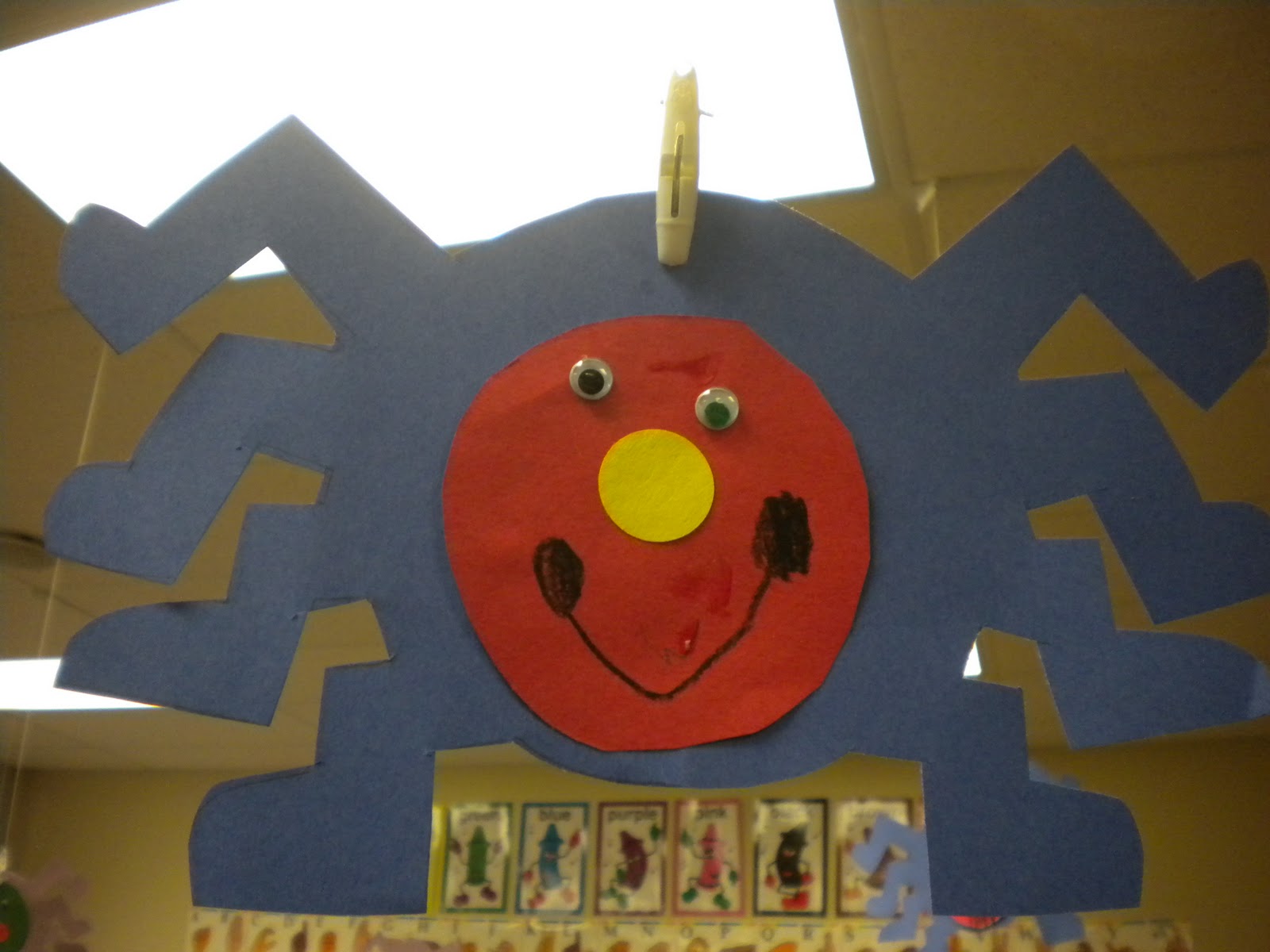
Monster FUN!!

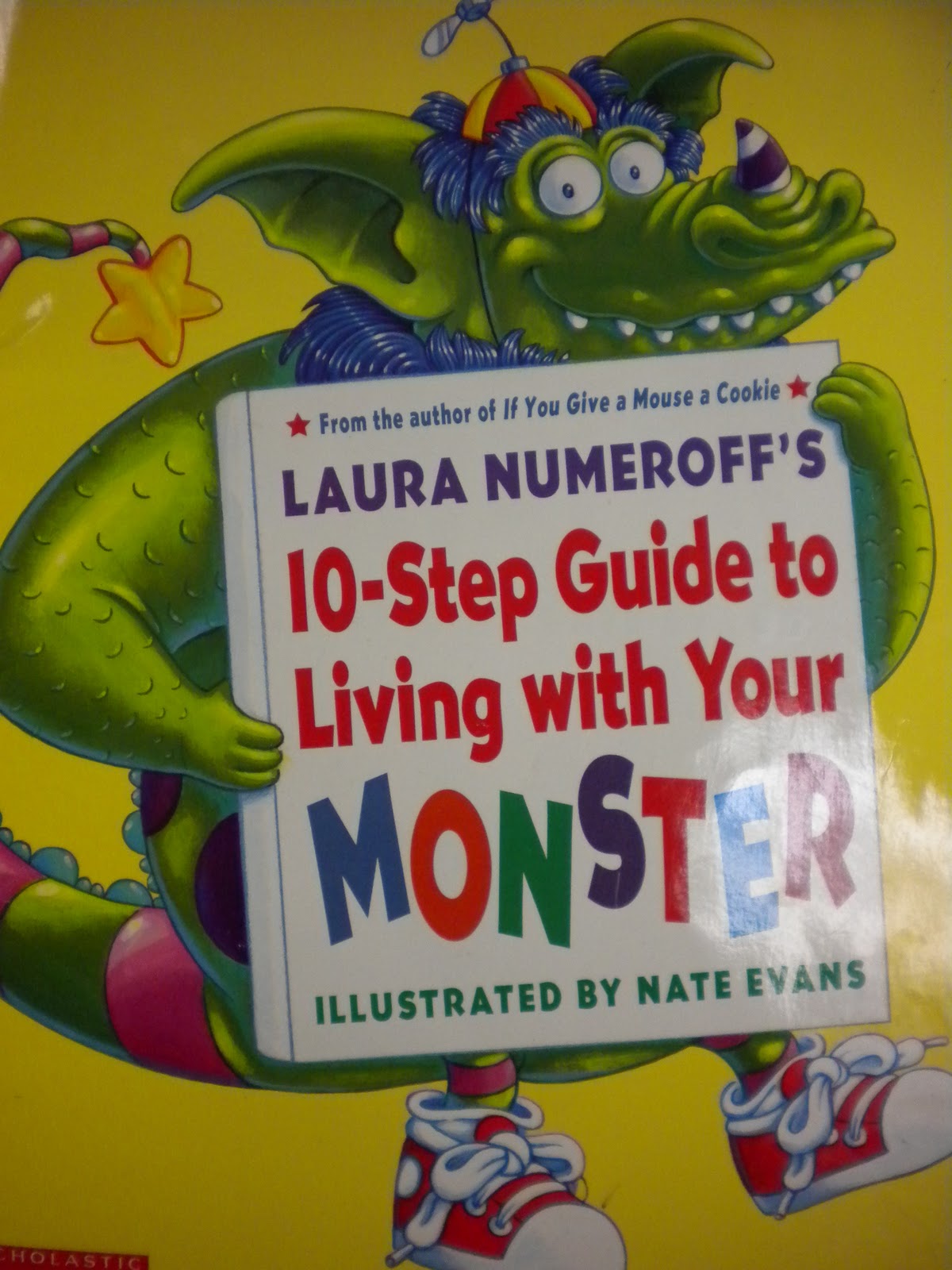
We also had a lot of fun with monsters last week!  We read both of the books above as well as many other ones.  We read the book 10-Step Guide to Living With Your Monster.  The kids had so much fun with this book! We brainstormed different things we would need to do if a monster lived with us, and then we wrote a "how to" page if we lived with a monster!

 (Give him a bath)
(Teach him to sleep..not sure what she wrote after that!)

We brainstormed verbs and adjectives that describe monsters and wrote list poems.
We sang a fun monster song!  This picture is from my friend, Sheyna .. her great idea!  I forgot to snap a photo of mine!
 We also created a question web before we read Lenoardo the Terrible Monster and mad a story map in our reader's workshop journals for the book. The idea for this questioning web came from Kim Adsit's web site. You can also purchase many great blacklines for reader's workshop from Kim Adsit at her TPT store.  I use many of them - the kids love them and they help to elicit great conversations about books!

We also made monster glyphs! This idea is from Deanna Jump's Monsters packet on TPT.  It's a steal at only $3!!


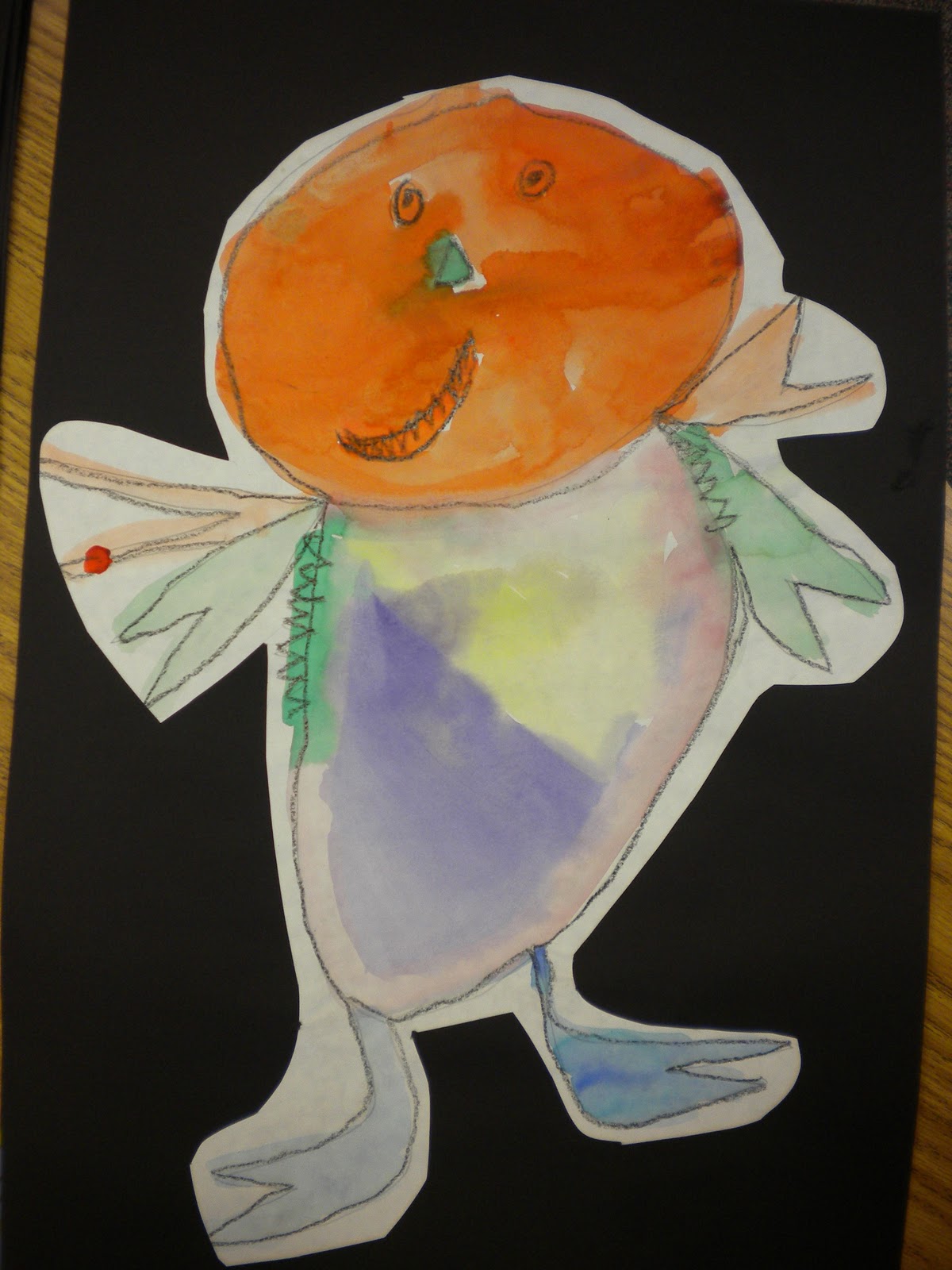
Finally we water colored monsters! This was a directed drawing activity - the kids watched me draw the head (then they drew it), we drew the body (then they drew it)...and so on.  They added the eyes, mouth, spots, hair, etc. themselves.  I love how they all turned out so different!  Too cute!


Text-to-Self Connections


This week's focus book was Plaidypus Lost.   I have to admit, this book was not one of my favorites until the author, Susan Stevens Crummel, visited our school last year.  She made the book come alive when she read it to us and gave us the background behind it.
 
I used this book to teach text-to-self connections.  In the story, the little girl loses her beloved plaidypus that her grandmother made for her from her grandpa's old shirt.  However, the little girl was not responsible (a vocabulary word that we talked about with this book) and misplaced (another vocab word!) her friend in many different places.  Before we began reading the book, I asked the children to think of a time they lost something special to them; how did it make them feel?  Did they ever find it?  Did someone help them find it?  And so on...I wanted them to get a good mental image so they could good make strong text-to-self connections.

After we read the story and talked about our connections and wrote about them in our Reader's Workshop journal.  This page is from Kim Adsit's Reading comprehension pack at Teacher's Pay Teachers.

We also completed a story map together created from an example on Kim Adsit's site.
 We made a list of all the places they were in the story as well as all of the characters.  The children each signed up for one that they would like to draw and they created it for our flow map. (I'll post a picture of the sign-up chart later, I must have forgotten to snap one!)  Here are pictures of the flow chart that we created.  They children were very excited about how looonnnggg it was!  They did a wonderful job re-telling the story to help create the flow map.


We also read the book, A Platypus Probably and discussed the differences between fiction and non-fiction texts.  We talked about the most important things we learned about a platypus and labeled the parts of a platypus in our science journal. (I'll post a picture later, I forgot again!)